
The Wrmak was a cargo ship that sank off the Lido of Venice due to adverse weather conditions in 1966.
The ship capsized during a storm that caused abnormal movement of the cargo. The hull lies at a depth of about -15m.
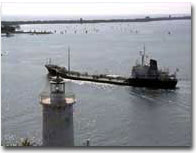
The Wrmak was a cargo ship that sank off the Lido of Venice due to adverse weather conditions in 1966.
The ship capsized during a storm that caused abnormal movement of the cargo. The hull lies at a depth of about -15m.
Diving on the wrecks off Jesolo and in the Gulf of Venice is an experience that goes far beyond simple underwater observation; it is a journey suspended between history, mystery, and a powerful nature reclaiming its spaces.
Here is what makes these dives so magnetic:
These hulls are not just old iron. The Quintino Sella or the SS88 are fragments of military and civilian history resting in an environment that preserves them almost jealously.
Descending into the “green” of the Adriatic and gradually seeing the silhouette of a torpedo boat or the remains of a scattered cargo appear gives the feeling of being an archaeologist of silence.
Every tear in the metal sheets tells a story of storms or battles.
The seabed of the Northern Adriatic is predominantly sandy, a uniform expanse that makes wrecks such as the Vila or the Vurmac true “islands of life”.
As soon as you approach the structure, biodiversity explodes:
Large conger eels and majestic lobsters that have made the pipes and metal sheets their castle.
Dense schools of damselfish and groups of brown meagre dancing among the structures, disappearing and reappearing through the openings of the wreck.
The iron structures are completely covered with sponges, coelenterates, and anemones that, under the light of the torch, reveal vibrant reds and oranges you would never expect to find here.
The Adriatic often offers a dreamlike atmosphere. The light filtering through water that is less clear than in the tropics creates a play of shadows and chiaroscuro that makes the wreck structures appear both monumental and ghostly.
There is no blinding glare of a coral reef, but rather a sense of soft discovery, where every detail — a bollard, a piece of engine, or old tableware from the cargo — suddenly appears out of nowhere.
Exploring the so-called “lost cargoes” on unknown ships touches the deepest chords of a diver.
It is the pure curiosity of understanding what they were carrying, who those ships belonged to, ships that the sea decided to keep.
It is an investigative dive, where the eye must search among the debris to catch sight of familiar shapes transformed by time.
In short, diving here means accepting the challenge of a sea that does not reveal itself immediately, but rewards those who know how to observe patiently, offering one of the most intimate and authentic diving experiences in the entire Mediterranean.