
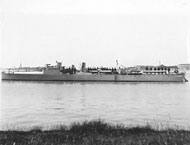
 The Italian torpedo boat 5PN was hit on the morning of June 26, 1915, by an Austrian submarine about 9 miles from the Piave Vecchia lighthouse.
The ship was built in 1911 by the Pattison shipyards in Naples, hence the designation 5PN; it was armed with 2 torpedo tubes, one at the bow and one at the stern, and a 57-millimeter cannon located in the stern area.
The ship was 42 and a half meters long, about 4 meters wide, and weighed 140 tons when fully loaded. Italy had entered the war just a few days earlier, and the 5PN was patrolling the stretch of sea off the coast of Venice when, suddenly, Commander Spano spotted the wake of a torpedo heading towards his ship. The impact raised a column of water and oil 30 meters high, striking the torpedo boat at the bow. Given the time that has passed, little remains of the ship.
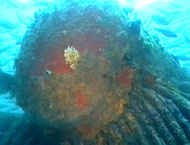
The cannon lies on its side, destroyed. The two Thornycroft boilers, with a power of 3200 horsepower capable of propelling the torpedo boat at a speed of 27 knots, rise majestically from the seabed. The ship was struck by one of the many Austrian submarines coming from Pola and stationed at periscope depth among the minefields erected by the Italians to protect the coast in front of the beaches of Venice and Jesolo.
This is the stern of the ship, and the mud hides the propeller.
A torpedo can still be seen inserted in the launch tube, now lying on the left side of the boiler, a testament to the rapidity with which the tragedy unfolded.
The quick reflexes of the commander in ordering "full reverse" were able to partially slow the sinking of the 5PN, allowing almost the entire crew to be saved. To better understand the structure of the wreck, we use some drawings taken from the book "The Italian Torpedo Boats" by the Historical Office of the Navy.
These ships were designed to strike and vanish into thin air.
The considerable speed was provided not only by the powerful machinery and boilers but also by their sleek and compact shape. The remarkable maneuverability was due to the rudder located in the stern structure entirely outside the hull.
During the sinking, Commander Spano ordered to fire some cannon shots in the presumed direction of the submarine to avert the danger of a second torpedo launch and with the intent to attract the attention of other ships that might be in the area.
He then ordered the crew to be ready to face a possible surface attack from the submarine, but it was not necessary. The ship, with a large hole in the bow, was already sinking.
At 11:20, 40 minutes after the impact with the torpedo, Commander Spano gave the order to abandon the ship. The torpedo boat sank vertically.
When the bow touched the bottom, at a depth of 22 meters, the stern remained above water for another 5 minutes before disappearing. Probably the Austrian submarine that was stationed nearby was still observing the scene at periscope depth.
Fortunately, the survivors were rescued by another torpedo boat that came to help, attracted by those cannon shots fired earlier.