



“MOLCH” FROM SISTIANA (TRIESTE) During the end-of-course dives, it sometimes happens to take students to the bay of Sistiana, in the Gulf of Trieste.
 The bay during World War II was a naval base for seaplanes and the entire Trieste coastline was militarized with loading ramps and submarine support bases, with shelters in tunnels carved into the rocks to protect them.
On the right side of the bay, you can have beautiful dives under the steep cliff, which then gently slopes underwater down to 15 meters, observing various species of underwater flora and fauna; while on the left side of the beach in front of the bathing area, at a depth of 10 meters and only 200 meters from the beach, there is a mini submarine from World War II.
It is a small wreck to see, if there is visibility, typically around 5-8 meters, of interest mainly for the history that accompanies it.
First of all, the one in Sistiana is not a slow-running torpedo, so-called "pig", but a German "Molch". The S.L.C. slow-running torpedo, commonly called a pig, was instead an explosive head connected to a motor apparatus that was "ridden" by two trained operators to approach enemy ports.
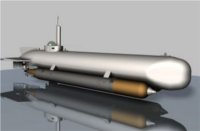
Here it is a single-seat German mini-submarine of the "Molch" type, built by the Germans during World War II from 1944 in about 300 units, to protect the Gulf of Trieste from enemy attacks, approximately 10 meters long and 1.5 meters wide.
Powered by a series of large batteries that operated an electric motor with a large bronze propeller that could develop a speed of about 3.3 knots with a range of almost 100 miles. Equipped with large fins and rudders, to compensate for the reduced speed and size. It navigated at periscope depth below the surface of the sea to approach the target. On the sides were attached the two large torpedoes that armed it, which were released by the pilot near the target to be sunk.
A few years ago, the periscope, fixed at 1.5 meters long and containing the gyroscopic compass inside, could still be seen, but then despite the war wrecks being considered state museums after 50 years, some unscrupulous diver thought to dismantle it and steal it, thus removing from all the divers who dive after him the chance to admire it. Congratulations…to the diver!!! Today, as it is found, without periscope and without torpedoes, it almost looks like an abandoned tank. For students, it is still an interesting underwater training ground, if only for underwater orientation exercises to find it by following the coordinates or the degrees of a compass starting from land.